How to Select the Right Pasteurizer Capacity for Professional Gelato Production
Choosing the correct pasteurizer size is a critical decision when designing or upgrading a gelato factory or centralized production facility. An undersized pasteurizer creates production bottlenecks, while an oversized system increases capital costs, energy consumption, and operational inefficiency.
This guide explains how to properly size a pasteurizer for gelato factories, based on daily production volume, workflow design, batch freezer capacity, and long-term expansion planning.
Why Pasteurizer Sizing Matters in Gelato Manufacturing
In commercial gelato production, pasteurization is not an isolated step. It directly affects:
-
Production throughput
-
Product consistency
-
Labor efficiency
-
Energy usage
A correctly sized pasteurizer ensures that pasteurization cycles align smoothly with batch freezing, aging, and downstream processes, avoiding idle time or production delays.
To ensure food safety and optimal texture, gelato production includes steps like pasteurization. For detailed sizing considerations, see the pasteurizer sizing guide for gelato factories.
Step 1: Calculate Daily Gelato Mix Requirements
Pasteurizer sizing begins with determining how much gelato mix your factory needs to process each day.
Key questions to consider:
-
What is the daily gelato output (liters)?
-
Is production seasonal or consistent year-round?
-
How many flavors are produced per cycle?
Example:
-
Daily gelato output: 500 liters
-
Gelato mix to finished product ratio: approximately 1:1
Required pasteurized mix per day: 500 liters
Step 2: Understand Pasteurizer Capacity Ratings
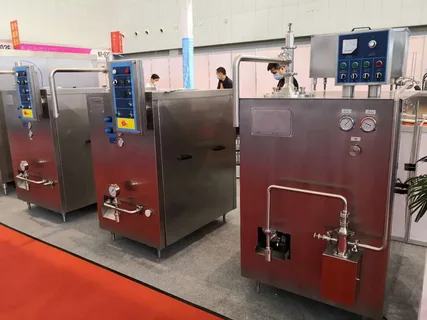
Pasteurizers are typically rated by batch capacity, such as:
-
60 liters per batch
-
120 liters per batch
-
200 liters per batch
-
300 liters or more per batch
This rating refers to the maximum volume processed in one pasteurization cycle, not hourly output.
Step 3: Determine Required Pasteurization Cycles
Use the following formula to estimate daily workload:
Example:
-
Daily mix volume: 500 liters
-
Pasteurizer capacity: 125 liters
For most gelato factories, 3–5 cycles per day is considered efficient and manageable without overloading the system.
Step 4: Match Pasteurizer Size to Factory Scale
Small Gelato Factories and Central Kitchens
-
Daily output: 100–300 liters
-
Recommended pasteurizer size: 60–120 liters
Best suited for:
-
Artisan producers
-
Regional supply operations
-
Limited product ranges
Medium-Scale Gelato Factories
-
Daily output: 300–800 liters
-
Recommended pasteurizer size: 120–200 liters
Ideal for:
-
Multi-store gelato brands
-
Wholesale and foodservice supply
-
Balanced flexibility and productivity
Large Gelato Factories
-
Daily output: 800 liters and above
-
Recommended pasteurizer size: 200–300 liters or larger
Designed for:
-
Industrial production
-
Export-oriented operations
-
Continuous, high-volume workflows
While pasteurizer capacity plays a key role in industrial output, understanding the differences between gelato and ice cream machines can further clarify why specific equipment is necessary for consistent results.
Step 5: Coordinate Pasteurizer Capacity with Batch Freezers
Pasteurizer capacity must be aligned with batch freezer throughput to maintain a smooth production flow.
Best practices include:
-
One pasteurizer batch supplying one to two batch freezer cycles
-
Avoiding waiting time caused by mismatched capacities
-
Scheduling pasteurization to match freezing demand
Factories operating multiple batch freezers should size pasteurization capacity accordingly to support parallel production.
Step 6: Consider Production Shifts and Cleaning Time
Pasteurizer sizing should also account for:
-
Number of production shifts per day
-
Cleaning and sanitation time (CIP)
-
Frequency of flavor changes
Practical considerations:
-
Single-shift operations benefit from larger batch capacities
-
Multi-shift factories can operate efficiently with moderate batch sizes and more cycles
Ignoring cleaning and downtime often leads to overestimated production capacity.
Step 7: Plan for Future Expansion
A common mistake is selecting a pasteurizer that only meets current production needs.
Recommended buffer:
-
20–30% additional capacity above present demand
This allows for:
-
Seasonal production increases
-
New flavor launches
-
Additional batch freezers or production lines
Common Pasteurizer Sizing Mistakes
-
Choosing capacity based solely on equipment price
-
Oversizing without matching batch freezer throughput
-
Underestimating cleaning and downtime
-
Failing to plan for future expansion
These mistakes often result in higher costs and lower operational efficiency over time.
Summary: How to Choose the Right Pasteurizer Size
To correctly size a pasteurizer for a gelato factory:
-
Calculate daily gelato mix volume
-
Select a batch capacity that minimizes cycles
-
Match pasteurizer size to batch freezer capacity
-
Account for shifts, cleaning, and workflow
-
Include expansion capacity
A properly sized pasteurizer improves production efficiency, consistency, and long-term profitability in professional gelato manufacturing.