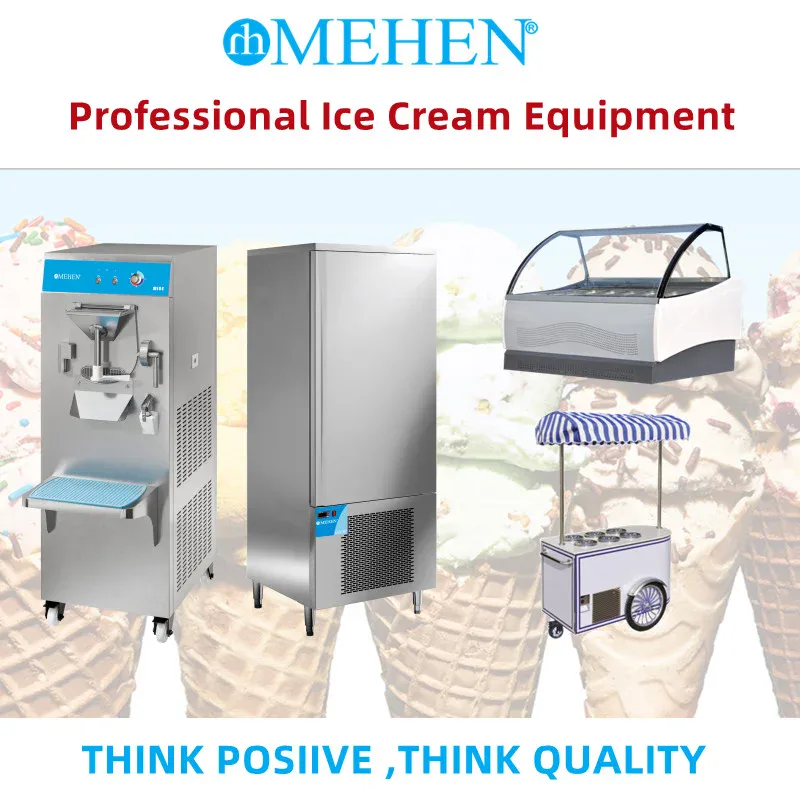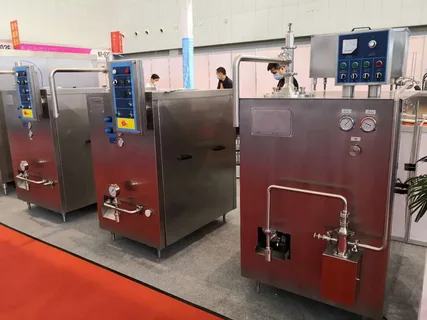
Walk into a new gelato shop, and you’ll often see the same pattern:
A beautiful display.
A large commercial machine.
An expensive setup.
And six months later, the business disappears.
Not because the gelato was bad.
Not because the location was terrible.
But because the equipment strategy never matched the actual business stage.
After speaking with many gelato startups and equipment buyers, one problem appears repeatedly:
Most new gelato businesses buy machines for the business they hope to become — not the business they actually are today.
And that mistake quietly destroys cash flow.
The Biggest Mistake: Overestimating Demand
Most beginners imagine success in “peak mode.”
They calculate:
- Full stores
- Long customer lines
- High daily output
So naturally, they start looking at larger commercial machines.
The logic feels reasonable:
“If the business grows, I’ll already be prepared.”
But in reality, early-stage food businesses rarely fail because they cannot produce enough.
They fail because:
- Rent is too high
- Labor becomes difficult
- Equipment payments create pressure
- Daily sales stay inconsistent
In other words:
Capacity is usually not the first problem.
Cash flow is.
Why Large Machines Hurt Small Businesses
Large gelato machines are designed for operational efficiency at scale.
For larger stores or high-volume production environments, these commercial gelato machine setups become more practical once customer demand becomes stable.
But scale changes everything:
- Customer volume
- Staff workflow
- Ingredient turnover
- Storage systems
Without those conditions, bigger equipment often creates more problems than advantages.
What Actually Happens
Many new shops buy machines capable of producing far more gelato than they realistically sell.
The result:
- Higher electricity usage
- Larger cleaning workload
- More wasted ingredients
- Slower return on investment
And ironically, most customers never notice the difference.
Because customers are not calculating your hourly output.
They are reacting to:
- Visual presentation
- Flavor
- Experience
- Atmosphere
The Truth Most Equipment Sellers Rarely Mention

For many small gelato businesses:
The display sells more gelato than the freezer.
For operators comparing different setup strategies, this breakdown of gelato machines for different business stages explains why smaller, flexible equipment often performs better for new businesses than oversized commercial systems.
This surprises many first-time buyers.
But in real street food and dessert environments, visual attraction drives impulse decisions.
Bright colors.
Texture.
Lighting.
Visible freshness.
These factors often influence sales more directly than production capacity.
That’s why some small gelato carts outperform larger stores in high-foot-traffic areas.
Not because they produce more.
But because they create faster buying decisions.
Why Gelato Carts Are Quietly Becoming Smarter Business Models

Traditional advice usually pushes new businesses toward permanent stores.
But in many cities today, smaller mobile setups are becoming more efficient entry points.
A cart has several hidden advantages:
- Lower startup risk
- Faster testing
- Flexible location
- Lower staffing pressure
Most importantly:
It allows operators to learn the business before scaling it.
This matters more than people realize.
Because the hardest part of the gelato business is not making gelato.
It’s understanding:
- customer flow
- seasonality
- local demand
- operational rhythm
A smaller setup gives businesses room to learn without carrying oversized financial pressure.
For operators still deciding which business model makes the most sense, this guide on starting a gelato business explains the differences between carts, shops, and production setups.
Foot Traffic Matters More Than Recipes
Many beginners spend months obsessing over recipes and machine specifications.
But experienced operators often pay more attention to something simpler:
How many people walk past the business every day?
A perfect recipe in a weak location struggles.
An average product in a high-traffic environment often survives much longer.
This is especially true for gelato because it is highly visual and impulse-driven.
People rarely wake up urgently needing gelato.
They buy it because:
- they see it
- the display looks attractive
- the environment feels enjoyable
That’s why location and visibility frequently outperform technical perfection.
The “Instagram Problem” in Modern Gelato Shops
Another growing issue is what many operators privately call the “Instagram trap.”
A business is designed to look successful online:
- expensive interior
- oversized machines
- polished branding
But operationally, the numbers don’t work.
Social media aesthetics can create unrealistic expectations for new entrepreneurs.
Many people build for appearance first and operational sustainability second.
In practice, sustainable gelato businesses usually grow in the opposite direction:
- Simple setup
- Stable cash flow
- Gradual upgrades
- Expansion later
What Smart Operators Usually Do Instead
The most stable businesses often begin with surprisingly modest setups.
Instead of maximizing equipment immediately, they optimize for:
- flexibility
- lower pressure
- faster adaptation
They upgrade only after:
- customer demand becomes predictable
- workflow problems become real
- production limits actually appear
That approach may feel slower at the beginning.
But long term, it is usually safer and far more profitable.
So What Machine Should You Actually Buy?
The better question is:
What machine fits your current business stage?
For many businesses entering the market today:
- compact batch freezers
- smaller showcases
- flexible setups
are often the smarter starting point.
Especially for:
- carts
- cafés
- first-time operators
- seasonal locations
Final Thought
The gelato industry often looks glamorous from the outside.
But sustainable businesses are rarely built on oversized ambition.
They are built on:
- realistic planning
- controlled growth
- understanding customer behavior
- matching equipment to actual demand
Ironically, the businesses that scale successfully are often the ones that started smaller than expected.